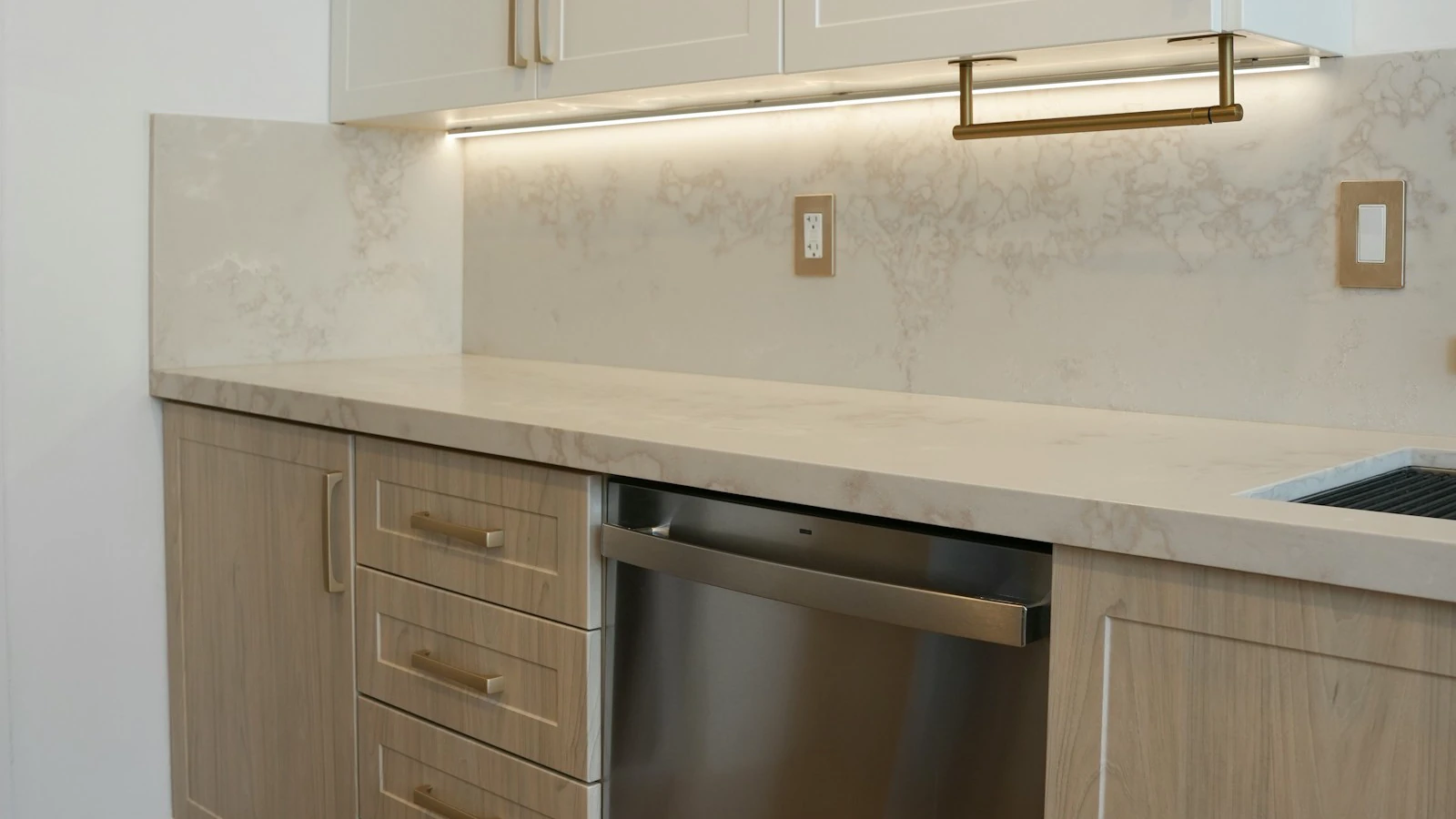
A dishwasher that is not draining is usually blocked by a clogged filter, a clogged garbage disposal or a kinked drain hose. Clean the filter at the bottom of the tub, run the disposal, and check the hose under the sink. If water still stands after that, the drain pump may have failed.
Before You Start
First, make sure the cycle actually finished. If a cycle was paused, canceled or interrupted by a power blip, the dishwasher may simply stop with water inside. Many models have a cancel or drain option. Check your manual, run it, and wait a couple of minutes. If the water drains, there may be nothing wrong.
Safety first: turn off power to the dishwasher before you reach into the tub or work under the sink. Many dishwashers are hardwired, so switch off the breaker rather than looking for a plug. Wear gloves, since broken glass often ends up near the drain. Keep towels and a shallow pan handy, and bail out standing water with a cup before you remove any parts.
7 Common Causes of a Dishwasher Not Draining
1. Clogged filter
This is the most common cause by far. Most modern dishwashers have a filter at the bottom of the tub that you are meant to clean by hand. Food, labels, seeds and grease build up there until water cannot pass through.
DIY fix: remove the bottom rack, then twist and lift out the filter. Rinse it under warm water and scrub it gently with a soft brush and dish soap. Do not use a wire brush, which can tear the mesh. Wipe out the area under the filter, then lock it back in place. Cleaning it once a month keeps most drain problems away.
2. Clogged garbage disposal
In many kitchens, the dishwasher drains through the garbage disposal. If the disposal is full of food, the dishwasher water has nowhere to go.
DIY fix: run the disposal with cold water for 20 to 30 seconds, then run a drain cycle on the dishwasher. Get in the habit of running the disposal before you start the dishwasher.
3. Disposal knockout plug still in place
If the problem started right after a new disposal was installed, this is very likely the cause. New disposals come with a plastic plug inside the dishwasher inlet. It has to be knocked out during installation. If it was missed, the dishwasher cannot drain at all.
DIY fix: with the power to the disposal off, loosen the dishwasher hose from the disposal inlet. If you see a solid plastic wall inside, tap it out with a screwdriver and hammer, then remove the loose plug from inside the disposal.
4. Kinked or clogged drain hose
The drain hose runs from the dishwasher to the disposal or sink drain. It can kink when the dishwasher is pushed back in or when items under the sink press on it. Grease and food can also clog it, especially at the ends.
DIY fix: look under the sink and straighten any kinks. If the hose looks clear, loosen the clamp at the sink end, hold the end over a bucket, and check for a clog. Many installations also route the hose in a high loop up under the counter to stop dirty sink water flowing back in. Keep that loop in place.
5. Clogged air gap
Some homes have an air gap, a small chrome or plastic cap on the sink deck next to the faucet. It protects your dishwasher from backflow. When it clogs, water may spill out of it into the sink, or the dishwasher may not drain.
DIY fix: pull or twist off the cap, remove the inner cover, and clear debris with a small brush or a pipe cleaner.
6. Failed or blocked drain pump
The drain pump pushes water out of the tub. If you hear it hum but no water moves, a piece of glass, a pit or a bone may be jammed in the impeller. If you hear nothing at all during the drain part of the cycle, the pump motor may have failed.
DIY check: with power off and the filter out, look into the sump for anything stuck. Some models let you reach the pump cover from inside the tub. Replacing the pump itself means removing panels and working with wiring, so most homeowners call a technician here.
7. Kitchen drain clog
If your kitchen sink is also slow, the clog is in the house plumbing, not the dishwasher. Clear the sink drain or trap first. Avoid pouring chemical drain cleaners into a line the dishwasher drains through, as they can damage seals and hoses.
Quick Reference: Causes, DIY Fixes and When to Call
| Cause | DIY fix | Call a pro when |
|---|---|---|
| Cycle interrupted | Run the cancel or drain option | Water stays after a full cycle |
| Clogged filter | Remove, rinse and scrub it | Filter is damaged or will not lock |
| Clogged disposal | Run the disposal with cold water | Disposal hums or will not turn |
| Knockout plug | Knock out the plug at the inlet | You are not comfortable under the sink |
| Kinked or clogged hose | Straighten or flush the hose | Hose is cracked or leaking |
| Clogged air gap | Remove the cap and clean it | It keeps clogging |
| Drain pump | Clear debris from the sump | Pump hums or is silent |
| House drain clog | Clear the sink trap | Call a plumber if it persists |
Hard Water and Other Fort Myers Factors
Many homes in Fort Myers and the rest of Lee County have hard water. The minerals leave white scale on dishes, but they also build up on the filter, in the sump and on the pump. Over time that scale slows draining and wears parts sooner.
- Use rinse aid and a good detergent. Both help with hard water spots and buildup.
- Run a dishwasher cleaner made to remove mineral scale every month or two.
- Watch for odors. In our humid climate, standing water turns musty fast. Fix drain problems quickly rather than letting water sit for days.
- Protect against surges. Summer lightning and power coming back after a storm can damage the control board, which may stop the drain pump from getting a signal.
How to Keep Your Dishwasher Draining
- Scrape food into the trash before loading. You do not need to rinse dishes fully, but large scraps should go.
- Clean the filter about once a month.
- Run the garbage disposal before every load.
- Run hot water at the kitchen tap before starting a cycle so the dishwasher fills with hot water.
- Keep items under the sink away from the drain hose.
When to Call a Technician
Call a pro if water still stands after you cleaned the filter, ran the disposal and checked the hose. The same goes if the pump hums or makes no sound, if you see an error code you cannot clear, or if water is leaking onto the floor. Water under cabinets can damage flooring quickly.
Our team handles dishwasher repair in Fort Myers for all major brands, including Bosch, GE, Whirlpool, KitchenAid, Samsung and LG. If your disposal is the problem, we also do garbage disposal repair. You get a written quote before any work starts.
Dishwasher Not Draining: FAQ
Is it normal to have a little water in the bottom of a dishwasher?
A small amount of water in the sump under the filter is normal for many models. It keeps the seals moist. Water standing above the filter or covering the tub floor is not normal and points to a drain problem.
How do I drain a dishwasher that is full of water?
Turn off the power at the breaker, then bail the water out with a cup into a bucket and soak up the rest with towels. Once it is empty, clean the filter and check the drain hose before running a drain cycle.
Can a garbage disposal stop a dishwasher from draining?
Yes. In many kitchens the dishwasher drains through the disposal, so a full or clogged disposal blocks it. After a new disposal is installed, a knockout plug left in the dishwasher inlet will also stop it draining.
How often should I clean my dishwasher filter?
About once a month for most households. Clean it more often if you do not scrape plates before loading or if you have hard water, which is common in Fort Myers.
Why does my dishwasher hum but not drain?
A humming sound with no draining often means something is jammed in the drain pump, such as glass, a fruit pit or a bone. If the pump is clear and still only hums, the pump motor may need to be replaced.